I Handed Off Maintenance of My Chrome Extension to AI
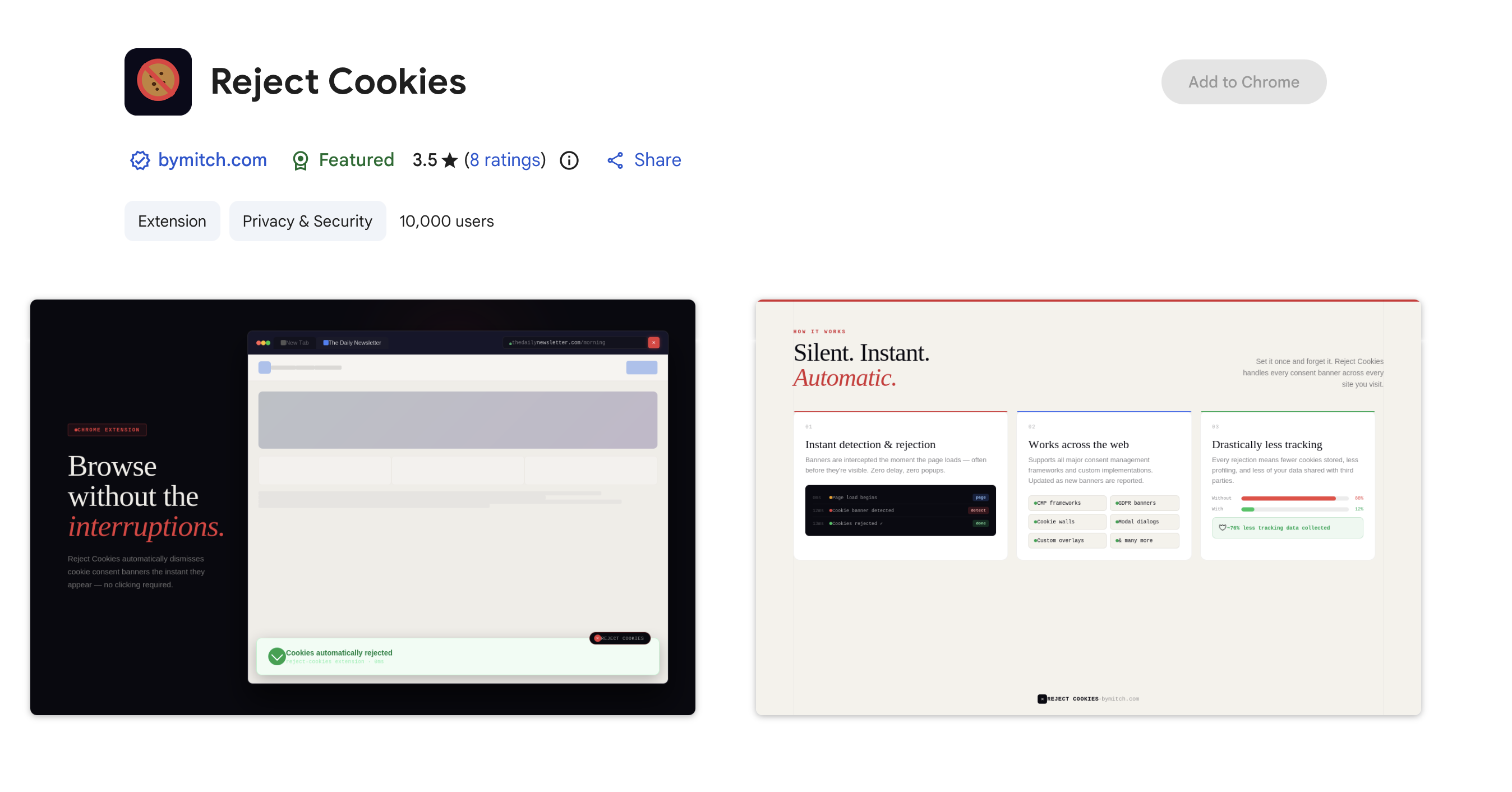
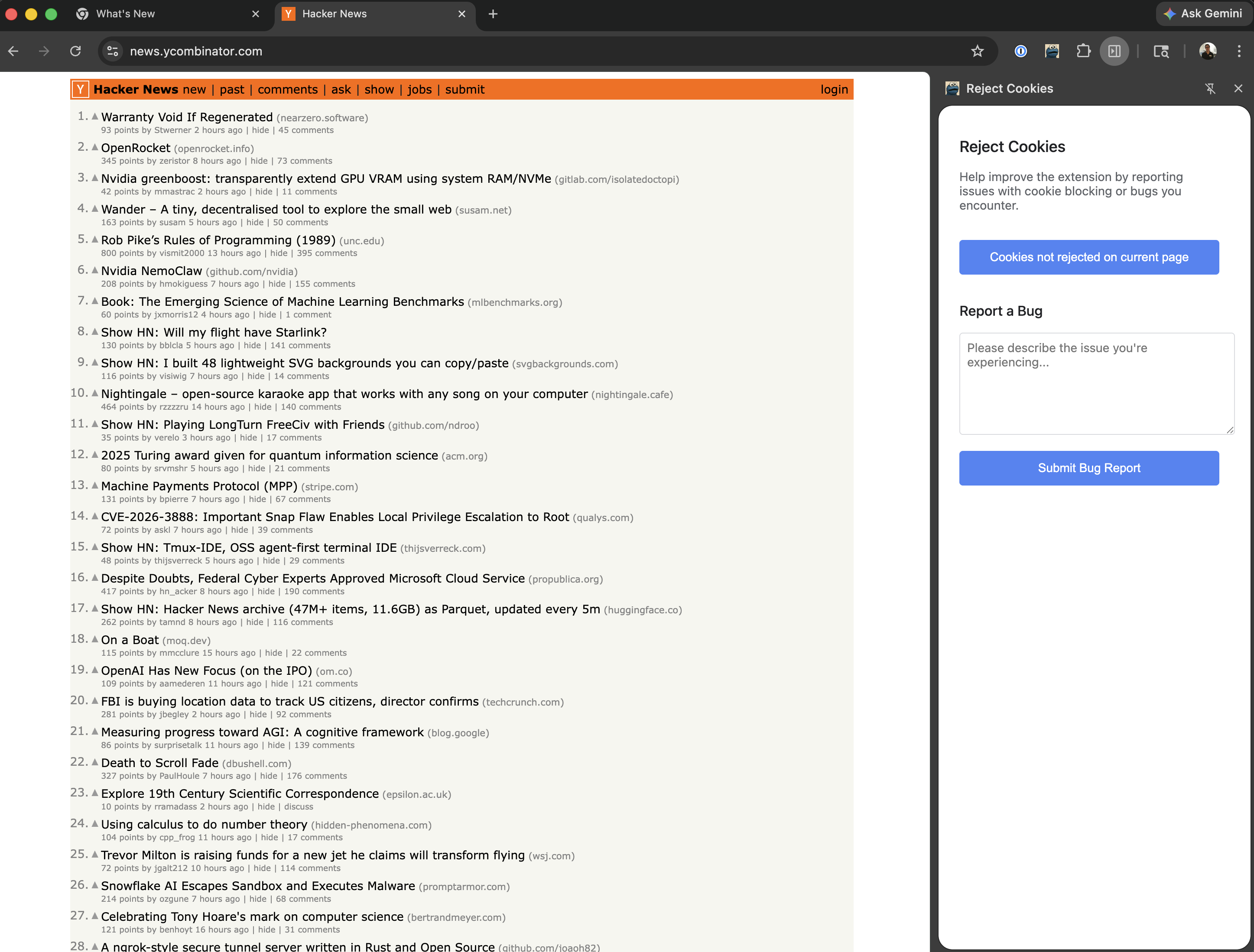
About one year ago I wrote about a chrome extension I created called reject-cookies. The basic premise was that it automatically rejects cookie banner pop-ups, saving you a couple tedious clicks. The extension is open source so feel free to check it out. It provided some functionality to allow users to report sites where they were burdened with a cookie pop-up. This way I could find pop-ups falling through the cracks and make some changes to the extension to handle those as well.
I’m sure many other folks have experienced the initial drive to maintain a new project fade away. This definitely hit me and the repo sat idle for most of the past year. Although the issue was I used the extension and I still hated clicking reject cookies on websites where it didn’t work. This led me to decide to hand off the project to AI.
As we’ll see, the majority of the automation for this project doesn’t require AI. The only place a human was previously needed was to make the code change, but that’s no longer the case. Running Claude in headless mode in a GitHub action with a preconfigured prompt was enough.
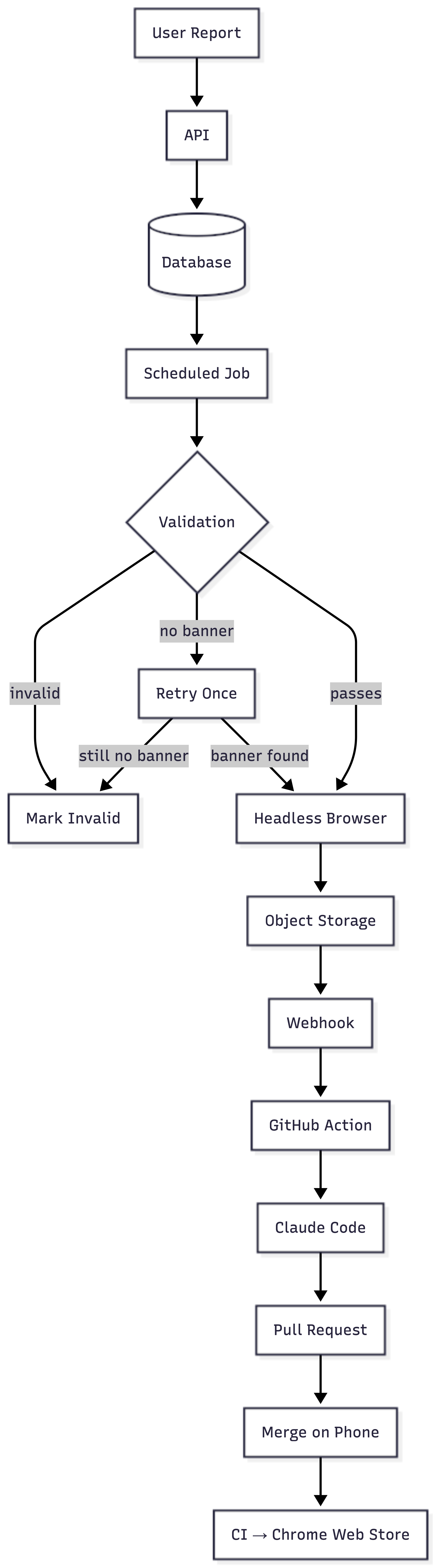
I think it will be easiest to explain the flow by walking through a quick example report end to end. To start, a user reports a site where they had to click on a cookie pop-up. This results in a row in a database like below.
| id | website | report_count | created_at | updated_at | status | invalid_reason |
|---|---|---|---|---|---|---|
| 1 | www.ebay.com | 2 | 2026-02-28T08:03:15.35… | 2026-03-01T05:10:49.49… | new | NULL |
A cron job will periodically check for new reports, load up the site, look for the banner, take a screenshot, and download the HTML. It will then upload all these artifacts and some metadata to object storage.
Next, a separate weekly cron will run and kick off a GitHub action. This uses the preconfigured prompt to tell Claude to pull the data from object storage, analyze the reports, and determine if any fixes need to be submitted. The action will submit any new fixes as a PR and also make a request to update all rows in the service that maintains the cookie reports.
Now, after the PR is created, I do still review and manually approve. Once that is done, a release job is kicked off that submits the new extension code to the Chrome Web Store.
It’s as simple as that, but there are some limitations. For example, the cron job that is going through the new user reports often gets blocked for being a bot. This is somewhat mitigated by the fact that there are only so many Consent Management Platform (CMP) providers and the banner HTML elements do not vary much for a single CMP. We just need one site with a report for a new CMP or CMP implementation to load to get that use case implemented.
When it came down to it, I thought a largely AI-maintained chrome extension is better than an unmaintained chrome extension. The cost for maintaining this extension is minimal, the majority of the services fall under the free tiers available at many developer platforms out there. The only real cost is the Claude API tokens. The job costs about $2.50 to run, so about $10 a month to maintain the extension. Not too bad.
I’d welcome more user reports if you find sites where you had to click reject cookies. This just puts Claude to work and in turn makes the extension even better.